Following Traces of Leonard Cohen

How Art Makes Us Feel
August 2, 2026“The years are flying past and we all waste so much time wondering if we dare to do this or that. The thing is to leap, to try, to take a chance.”
— Leonard Cohen
There is something suspicious about places routinely described as “suspended in time”. More often than not, someone simply arrived at precisely the right moment, before the telephone poles went up, the hotels opened and everyone else discovered the same view. The Island of Hydra is one such place. Known as the island where time has stopped, Hydra has long been a place drawing poets and artists towards itself. To follow this particular story, we have to go back to the 1960s, and the bohemian scene of the young artists who were staying there. Back then, the island of Hydra was a land of solitude and of plodding donkeys. Cars were absent, electricity unreliable. It was, in other words, almost perfectly equipped for retrospect, an “eleventh-century life”. In such primitive surroundings, amid the stunning beauties of the island and the glories of the Aegean, where fishermen still wrested a living from the sea and ferries scrabbled one from the land, Leonard Cohen came looking for his alone time, dedicated to writing.
Rumor has it, living unhappily in London, Leonard wandered into a bank one particularly miserable rainy day and noticed the clerk had a suspiciously good tan. Greece, came the answer. Shortly afterwards Leonard was on his way south, buying the house on the sunny island. There was, however, another connection; for Cohen had heard specifically about Hydra through the Rothschild circle and the Greek painter Nikos Hadjikyriakos-Ghika, whose ancestral home on the island had already been functioning for decades as a private salon for bohemians colonising the island in search of inspiration and freedom. Henry Miller had stayed at Ghika’s forty-room family mansion, as had figures moving through the interwar and postwar European avant-garde: George Seferis, Lawrence Durrell, John Craxton and Patrick Leigh Fermor among them. Le Corbusier also passed through the orbit. Miller arrived in 1939 and promptly found the island suitable for the sort of ecstatic geographical prose at which he excelled, declaring Hydra a form of “naked perfection.” By the time Cohen arrived two decades later, the supposedly undiscovered island had already been discovered by exactly the kind of people capable of making discovery contagious.
“There was this incredible community of artists and painters and a whole very wild attitude to life”
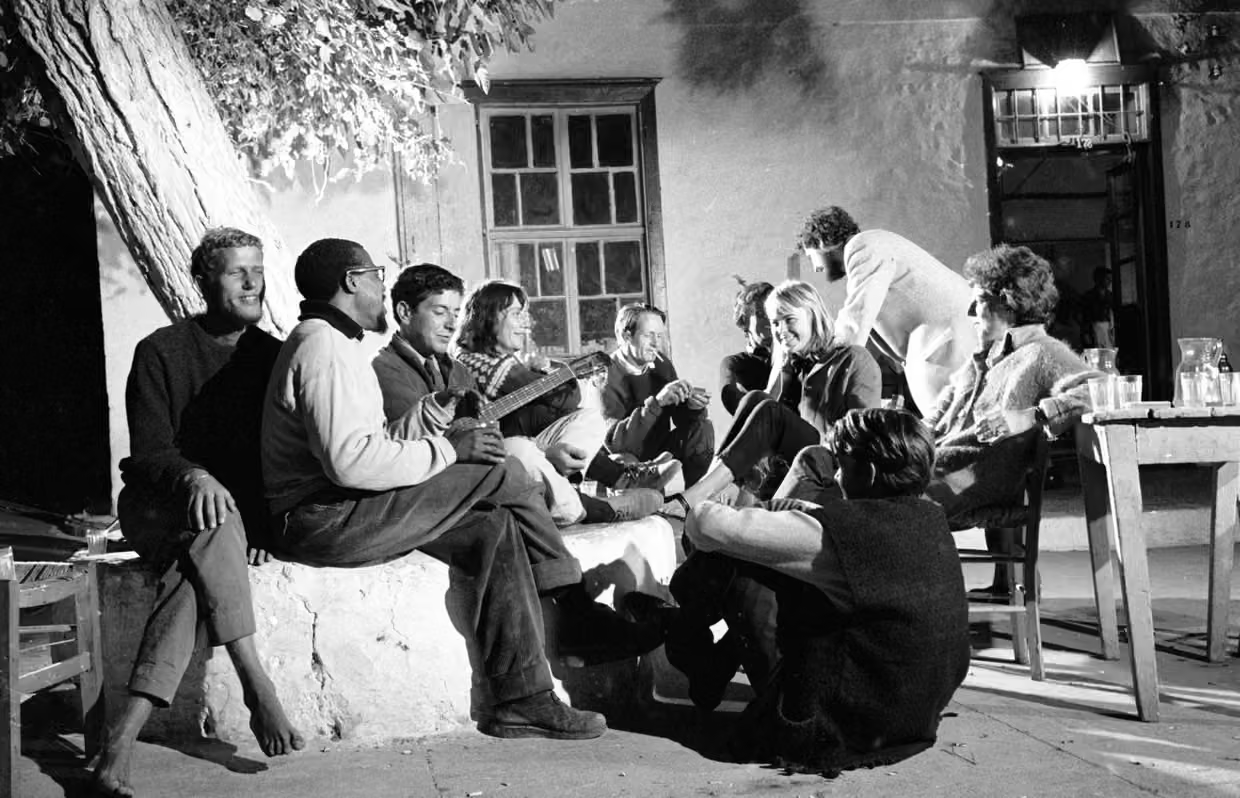
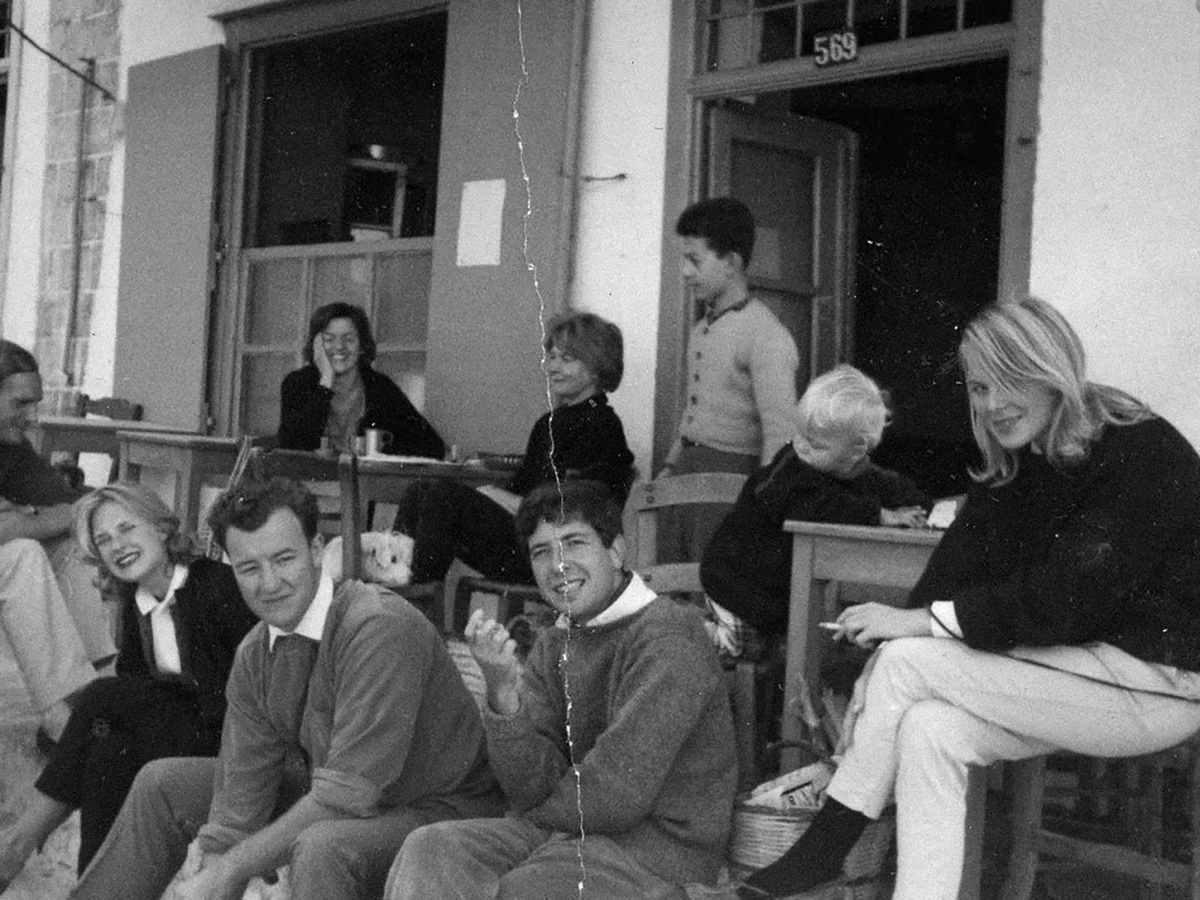
Leonard Cohen (holding the guitar) with Marianne (looking at him) and friends in Hydra, Greece, October 1960. Photograph: James Burke/The Life Picture Collection/Getty Images
The Mediterranean, widely known for its lifestyle of la vita lenta, offers the kind of isolation writers are looking for: to be alone, away from the civilisation of the large cities, away from daily life, and people from the regimen. Yet, what writers experience in embracing such solitudine is quite different from loneliness, and, therefore, it is highly inspiring: the endurance of novelty. The island of Hydra, with time that had stopped long ago in the past, provided conversations with like-minded people who were seeking such discussions. The modus vivendi was, indeed, the romanticised idea of bohemian artists committed only to art.
They were inspiring one another, having drunk conversations about poetry, followed by yet uncompleted fragments of songs, returning home and, with no mandatory or any other kind of urgent work, they were unfettered enough to write until dawn, to pursue the thought, to lose themselves in l’écriture automatique. The night hours hold the quietness of everything but the mind, and, once set loose, it is within the experiment that the asterpice is formed.
The freedom, they say. The freedom to experience novelty. That was what Hydra offered them: an unexpected novelty in every day, an encounter of like minds, directed to each other. The novelty was all around: new life, new house, new circle. When it all becomes known, the novelty is still there: in thoughts, and in sharing them.
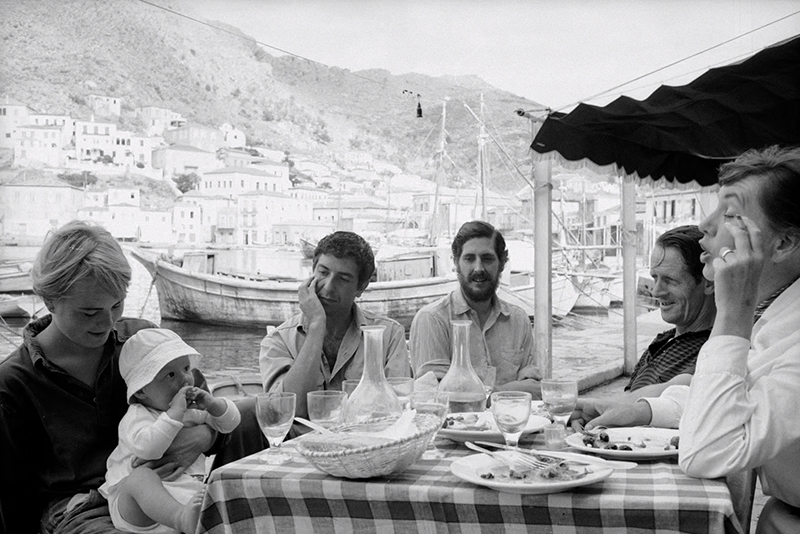
Marianne, left, with her baby son, Axel Jensen Jr, with Cohen (second left) and friends, Hydra, 1960. Photograph: James Burke/The LIFE Picture Collection/Getty Images
Before Leonard Cohen became what we associate with his name today, he himself arrived among generations of established artists; and was taken seriously by them. Among those were George Johnston, already a recognized writer, and his wife, Charmian Clift. The Johnstons read his manuscripts, discussed them with him, and encouraged him to perform. Leonard was still very young, still thinking of himself almost entirely as a poet and novelist, and bohemian Hydra gave him the rare chance of being unknown without being invisible. He used to spend mornings writing and evenings in conversations with people who were living exactly as he was hoping to live: dedicated to writing. Later, he described the Johnstons as:
“They drank more than other people, they wrote more, they got sick more, they got well more, they cursed more, they blessed more, and they helped a great deal more. They were an inspiration.”
His The Favourite Game, Flowers for Hitler and Beautiful Losers belong to the Hydra period.
And then, of course, there were the wires.
—Bird on the Wire
Upon his arrival, they were almost nonexistent. Electricity was limited, and telephones were rare. Eventually, the modernity of the 20th century arrived: poles appeared, followed by the lines themselves, cutting across a view previously free of them. Leonard later recalled staring from his window and thinking that civilisation had caught up with him—that the primordial existence he had imagined escaping into had already begun disappearing. Then the birds settled on the new wires, which eventually became one of his most enduring images.
Bird on the Wire is usually folded into the discography as a song about freedom, guilt and the impossibility of living without hurting anyone along the way. All true enough. Yet its first image is also oddly documentary: a technological object had entered an old landscape; nature immediately incorporated it; the poet watched the event from his window. The lyric began, quite literally, where modernisation crossed the sky. The liberty and the confinement, on the personal side, stay across the escape and inevitable modernity on the island that motivated it.
He was able to stand back from the rush of metropolitan life and devote himself to the questions of life and meaning, get his young life, full and successful as it had been, into perspective. Here he began to crystallize the wisdom of some of his best poetry, writing and songs, or it was here that he was reborn, where he truly began to find himself, where not least, the music of Greece entered his soul, evoking earlier memories and melodies, combining with them to suggest a new style, a new mystique. And it was here that he met Marianne Ihlen, who soon became his muse and his partner.
—So Long, Marianne
Together with her husband, known as the “Jack Kerouac of Norway”, 25 years old by then, Marianne came to the island. Shortly after their arrival, the ideal of freedom separated them, leaving Marianne alone with her baby son Axel. The profound friendship she had developed with Leonard soon grew into a romantic relation, with Marianne taking care of him, and Leonard providing for her and little Axel. Apparently, they used to have a happy period together, which motivated many of Cohen’s famous songs. She was his muse, controversial as it may seem today, as in the absence of electricity and other signs of modern civilisation, the role of the muse was to take care of such things too: providing candles, so that writers could spend their long sleepless nights capturing their inspiration. From a contemporary perspective, such polarisation of gender roles is less seen as romantic and is getting far more questioned, but shall we even judge the past by today’s morality?
The years of bohemian liberty came close to an end when Leonard moved to New York (after a short stay in Canada), disappointed with the inability to maintain his living out of writing, having Marianne and Axel join him. Yet, he was pursuing a career as a singer and songwriter, living in Hotel Chelsea in the midst of the turbulent years of youthful expression. As he claimed to her, it wasn’t her scene at all. Naturally, the differences in their lifestyle and long-term compatibility led to their separation—the one that, as it goes, leaves a deep and profound memory. Not only did she continue to appear, as a name and reference, in his poems, but they remained connected through financial support and letters for a lifetime. A cache of more than 50 love letters between Ihlen and Cohen sold for $870,000 at Christie’s auction, with the money supposed to have helped secure Axel Jnr’s future (who, unfortunately, suffered from mental disturbances and spent most of his life in institutions).
Just before her death in July 2016, Leonard sent an email to his former lover, which a friend read out to Ihlen. It said:
“Dearest Marianne,
I’m just a little behind you, close enough to take your hand. This old body has given up, just as yours has too, and the eviction notice is on its way any day now.
I’ve never forgotten your love and your beauty. But you know that. I don’t have to say any more. Safe travels old friend. See you down the road. Love and gratitude. Leonard”
He died four months later. The relationship’s legacy was a catalogue of classic songs – So Long Marianne, Hey, That’s No Way to Say Goodbye, Bird on the Wire – a great deal of heartache, but also a lasting sense of the creative power of love. Both of them, looking back on their relationship, named it a gift.
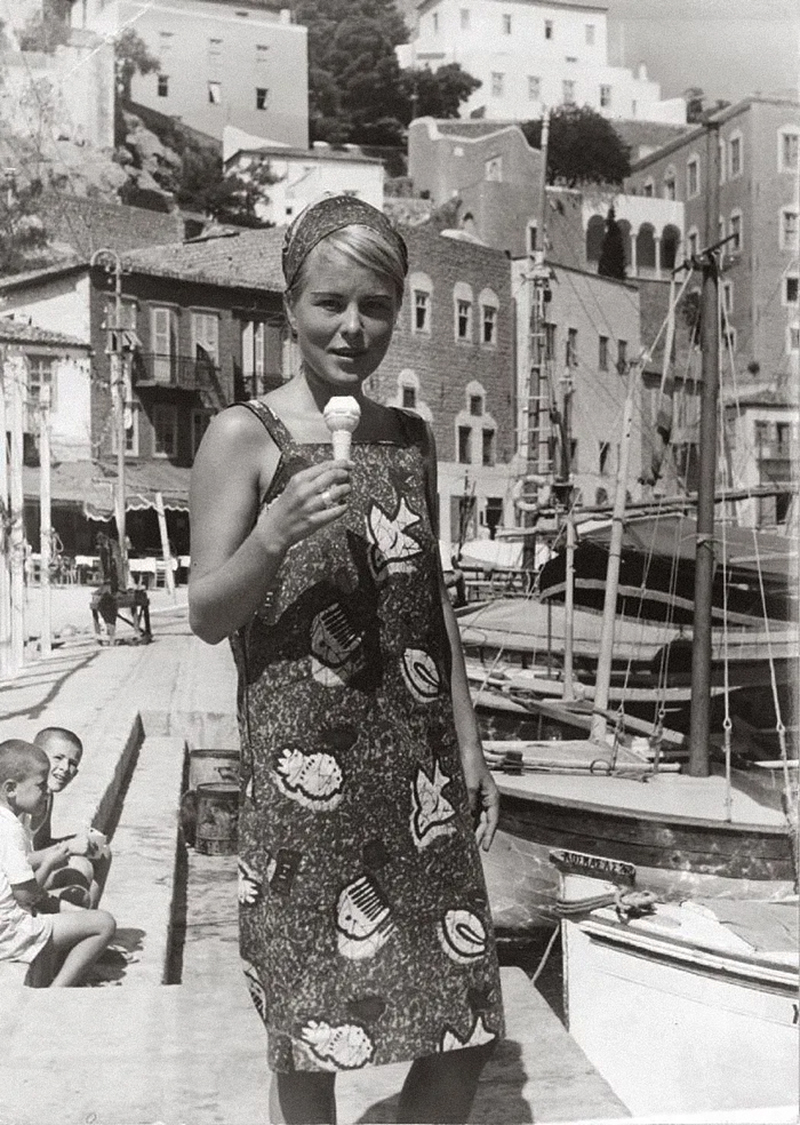
Marianne Ihlen at the port of Hydra in 1962, two years after she met Leonard Cohen. From So Long, Marianne: A Love Story. ECW Press
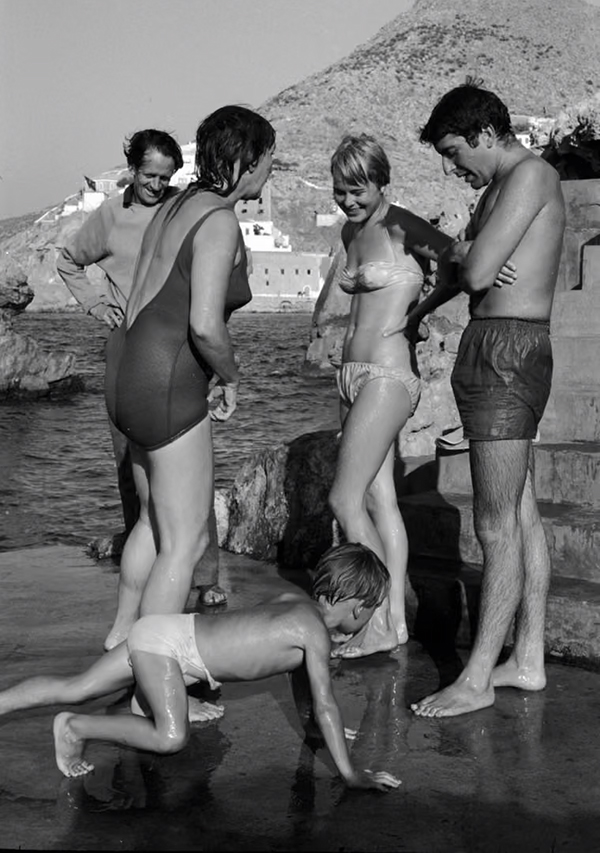
“It was as if everyone was young and beautiful and full of talent – covered with a kind of gold dust. Everybody had special and unique qualities. This is, of course, the feeling of youth, but in the glorious setting of Hydra, all these qualities were magnified.” — Leonard Cohen
—Death of a Ladies’ Man
The generation of the wild 60s, seemingly hungry for life, had long observed the connection between freedom and responsibility—or the consequences one’s free will has on others. The perspective mirrors Cohen’s relationship with Marianne in many ways. Their life on Hydra was built around an ideal of personal liberty; the one of love without ownership. While such is imagined as the ultimate state, almost as the description of what a relationship shall be, with no jealousy, and with mutual respect between the partners, in reality, occasionally, it turned out to be harder to behold. As if it was a paravan for one side to enjoy multiple connections and to set free his curiosity towards others (romantically or physically involved), while the other one was put on hold, waiting for love. Among many other terms, the conception of freedom, and love alongside it, was tested, leading towards the interpretation not that it is impossible to be free without hurting others, nor that the traditional form of devotion regardless of the circumstances was the only way to love others—rather, the “experimental” couples of the 60s broke the illusion of expecting a lifelong partnership. Or, preferably, having such an expectancy at all, pointing out that we are all free: free to choose how we love someone, and free to leave in order to stay devoted to our own growth. Maybe the hurting does not come from the act of breakup, as much as it comes out of dependency on the other (and, as far as we know, we cannot control anyone but our own self).
—Hydra and Cinema
The same period of Cohen’s bohemian living on Hydra was captured in various filmatic narratives. Cinema had noticed the romantic isolation of the island even slightly earlier. In 1956 Michael Cacoyannis filmed A Girl in Black on Hydra, using the island not as an idyll but as something considerably darker. Ellie Lambeti’s Marina moves through a small society governed by scrutiny, reputation and cruelty; even leaving the house exposes her to harassment. The film became one of Greece’s first major international art-house successes and offered audiences a Hydra in which dazzling sunlight did very little to improve human behaviour.
A year later Hollywood arrived and, with admirable efficiency, produced an almost entirely different island.
Jean Negulesco’s Boy on a Dolphin, starring Sophia Loren in her English-language debut, cast her as a poor sponge diver who discovers an ancient statue beneath the sea. Shot partly on Hydra in lavish CinemaScope, the film transformed the same economic realities—sponge fishing, poverty, antiquity—into exotic spectacle. Loren emerges wet from the Aegean; the island gleams; Greece becomes available as desire. It was the first Hollywood feature shot extensively in the country and helped disseminate abroad an image that Mediterranean tourism would spend the following decades perfecting.
Words by Greta Wolff