All Memories are Traces of Tears

Hotel Stories
March 31, 2026
The Cities We Become
April 28, 2026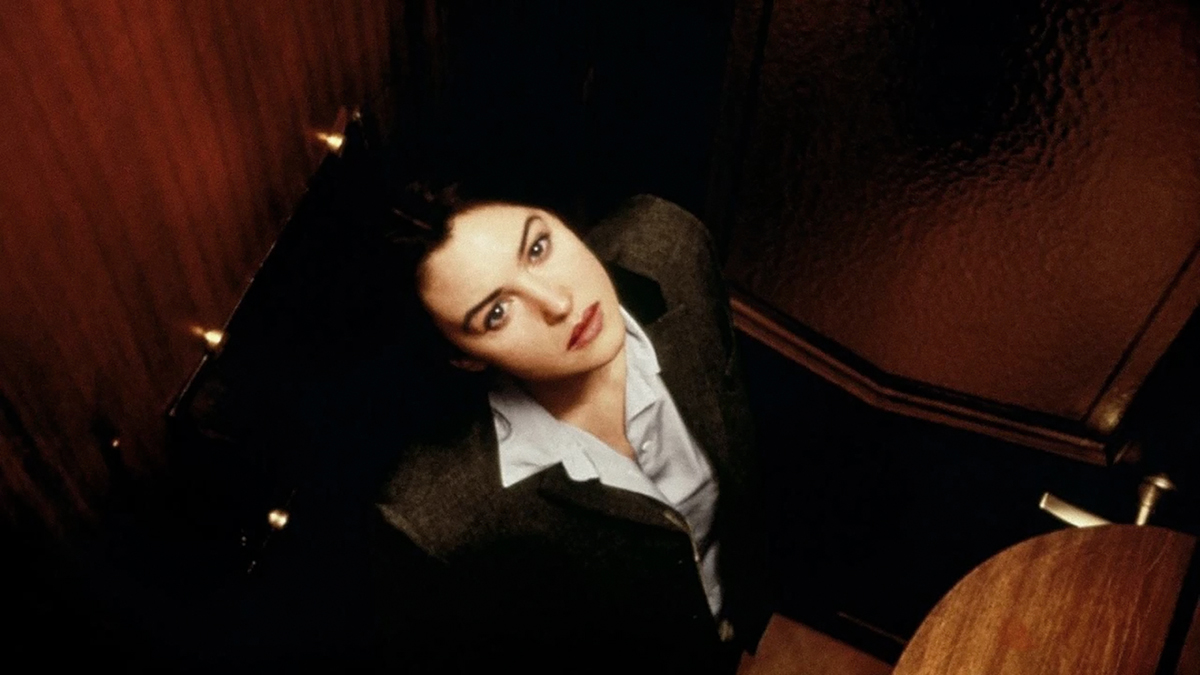
Monica Bellucci in L'Appartement
There is a tendency within people that orients the mind backwards: to the events passed, lovers left behind, and moments that can no longer be experienced. Be it due to the fascination with the way that constant change tends to replace certain events with others, leaving those, beautiful as well as sad, apart from our present. Yet the brain likes to hold on, so it reduces the time gap and keeps the image close in the narration, trying to prevent the fading. As if constant repeating keeps the saturation more vivid.
— on looking back as a separate moment —
The images from the past hold onto the subconscious, whether through the act of active reminiscence on cherished memories, or as a repressed impulse to recreate something that once was, there is no present that is free from the past. Yet why do we have the tendency to look back? What is gone seems to remain sweeter with distance, as if we tend to see the worth of a moment only by stepping away from it. While something is being lived currently, it looks normal, almost casual. With the aspect of change, and with time, we add interpretations, edit it, and in the end we seem to miss something that, all of a sudden, appears to have been rare and extraordinary.
— on the phenomenon of obsession over things that cannot be turned back —
When the mind becomes too busy looking back, it develops an obsession in trying to understand the segments of the bygone, to give interpretation, and to provide meaning. While constantly repeating it, instead of reaching a conclusion, it faces the paradox:
“The past is a foreign country; they do things differently there”
Articulated by L.P. Hartley, the observation describes how endless and perpetual revisiting is always painful. One can never be sure what to expect to find there, in the distant land of bygone reminiscences — for events might have been caused by unexpected actors that, although considered secondary, could have played the main role in the sequence of our life. The quote became the inspiration for the film L’Appartement (1996, Gilles Mimouni), which occupies the same narrative space: a past event, unresolved, becomes the obsession in the mind of the main character. As a certain slip away from structured and stable life, he revisits the place of a bygone episode, opening the adventure of a parallel reality — the confidential occurrence he lives in order to understand the past. The tendency becomes addictive, and he pursues his old love, only to find an unexpected set of events that played their part in what seemed so easily explained. The sequence shows that sometimes, what is considered to be a situation between two people may easily turn out to have many more actors whose desires were mixed secretly with ours. By looking back, by trying to understand what wasn’t acknowledged clearly at the time, we enter the dangerous territory of finding out facts that can potentially change our perception in a completely unexpected way. And, as the story goes, the mere objective of knowing it, of having it all cleared out later, is, once away from those circumstances, usually just meaningless.
The past, no matter how impulsively pursued, cannot be resolved, and the moment, even if passionate or intense in any other sense, cannot be relived.
The film clearly follows the line of double life — one as escapism from ongoing reality with the attempt to find answers, and the other as the clear image of something that happened before.
A similar venture is pictured in 2046 by Wong Kar-wai, showing a writer’s construction of an imaginary land where the moment remains the same forever. It holds less to memory as unexplained narration, and more to the feeling-tone of someone’s presence that left a lasting imprint. While looking for the past in the imaginary world of 2046, or by searching for a woman in every new rendezvous, the lost object is actually the sentiment of being with her. As Marcel Proust wrote: “To be with the people one loves, to speak to them, not to speak to them, it is all the same,” pointing to the silent bond, almost atmospheric, that once experienced becomes a landmark in the thoughts. The beginning of the film shows the very paradox of the past: the narration reveals the writer himself as the only person who came back from 2046, facing the disappointment of not finding her there. The metaphor extends to the perceiving that our memory of an event and another’s memory of the same may turn out to be completely different — that what on one side seemed like a soulmate connection, an amour fou, or the love of one’s life, on the other side might have remained a simple encounter that never prolonged into lifelong partnership. Once placed in the larger context of one’s life, with all the other people and events that passed by, such disillusionment is entirely possible. Which is why the common advice is not to look back — not to hold onto something that has slipped away — but to move forward, acting in the moment.
— on cultural context —
In the era that based its behaviour on the fast consumption of stimuli (events, connections, products) the past had no impact on ongoing life. People were kept safe from past hurt, as every miscalculation, slip, or faux pas seemed to have the possibility of being rectified in the ensuing period, and every missed opportunity, it was believed, might reappear again. By constantly jumping from one situation to another while keeping focus on the present moment, one never gets to face the consequences of actions, which is, without doubt, the safest way of avoiding painful pullback. After ages of following speedy trends, the world is turning towards slowness. And, as is well known, with the decreasing of rhythm, the echoes from older days start to circle back. Yet such a way of dealing with people and situations around us might also be considered a surface-level viability, knowing that protection, almost in every context, is simply a softened image of reality that, being such, creates another kind of delusion: the one that creates a certain 2046 in the future where, instead of memories, possibilities dwell. However, in its core it may be as delusional as Wong Kar-wai’s, precisely in its proneness never to reflect on actions, and therefore never to take responsibility for them. The romanticisation of another chance and there will be others might secretly destroy the connection that was a conversation away from infinite.
In the culture of fast consumption, emotions are being treated like other segments of consumerist society, while the idea of quick replacement, in both the relational and the productional, has reached the point of questioning its own superficiality.
— on interference —
Cinema offers something different. Not escape from the past, but a way of finally facing it, from a distance just safe enough to make looking possible. Its power has always been precisely this: to hold the feeling-tone of experiences we haven’t processed and show them back to us. From that buffer zone, one can watch the final scene, recognise one’s own chapter in it, and accept that no amount of nostalgia can relive what is gone.
Art interprets life, in the same way that life interprets art. But art goes a step further, interpreting what we do not want to face. And so what remains, after the film ends and the lights return? Not resolution, that was never what cinema promised. Not closure, which has always been a slightly false comfort. But something quieter and perhaps more honest: the acknowledgment that some things were real, and mattered, and are over. That the past is a foreign country and we were, briefly, allowed to visit. That Mr. Chow’s search for her in every woman he met was not weakness — it was the most human thing in the film, and perhaps the most human thing there is. We carry what we carry. Cinema simply gives us somewhere to put it down for two hours, so we can remember what it feels like to breathe without it. And sometimes, that is enough to return to the present — not healed, but lighter. Not resolved, but no longer only looking back.
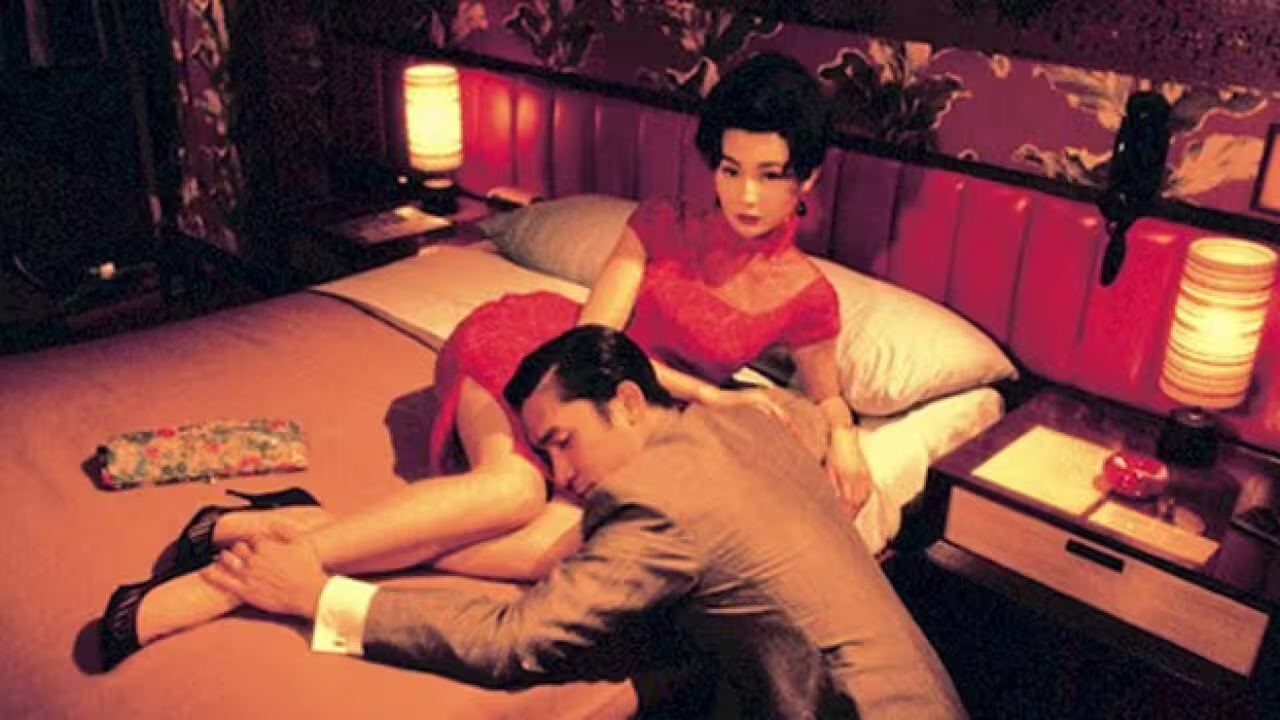
Maggie Cheung and Tony Leung Chiu‑wai in In the Mood for Love
Esiste, negli esseri umani, una tendenza che orienta la mente all’indietro: verso gli eventi trascorsi, gli amori lasciati, e i momenti che non possono più essere vissuti. Forse per la fascinazione con cui il cambiamento costante tende a sostituire alcuni eventi con altri, lasciando quelli, belli così come dolorosi, separati dal nostro presente. Eppure il cervello tende ad aggrapparsi, riducendo la distanza temporale e mantenendo l’immagine vicina nella narrazione, nel tentativo di impedirne lo sbiadire. Come se la ripetizione costante mantenesse la saturazione più vivida.
— sul guardare indietro come momento separato —
Le immagini del passato si aggrappano al subconscio, sia attraverso l’atto della reminiscenza attiva dei ricordi più cari, sia come impulso represso a ricreare qualcosa che è stato, non esiste un presente completamente libero dal passato. Eppure, perché abbiamo questa tendenza a guardare indietro? Ciò che è perduto sembra diventare più dolce con la distanza, come se tendessimo a cogliere il valore di un momento solo dopo essercene allontanati. Mentre qualcosa viene vissuto nel presente, appare normale, quasi casuale. Con il passare del tempo e con l’aspetto del cambiamento, aggiungiamo interpretazioni, lo modifichiamo, e alla fine sembriamo sentire la mancanza di qualcosa che, improvvisamente, appare essere stato raro e straordinario.
— sul fenomeno dell’ossessione per ciò che non può essere riportato indietro —
Quando la mente si concentra eccessivamente sul passato, sviluppa un’ossessione nel tentativo di comprendere i segmenti di ciò che è stato, di darne interpretazione e significato. Tuttavia, nella ripetizione costante, invece di giungere a una conclusione, si trova di fronte a un paradosso:
"The past is a foreign country; they do things differently there."
Formulata da L. P. Hartley, questa osservazione descrive come il continuo e perpetuo ritorno al passato sia sempre doloroso. Non si può mai essere certi di ciò che si troverà in quella terra lontana delle reminiscenze, perché gli eventi potrebbero essere stati determinati da attori inattesi che, pur considerati secondari, potrebbero aver avuto un ruolo principale nella sequenza della nostra vita.
La citazione è divenuta ispirazione per il film L’Appartement (1996, Gilles Mimouni), che occupa lo stesso spazio narrativo: un evento passato, irrisolto, diventa l’ossessione nella mente del protagonista. In una sorta di scivolamento lontano da una vita strutturata e stabile, egli ritorna al luogo di un episodio trascorso, aprendo l’avventura di una realtà parallela — un’esperienza confidenziale vissuta per comprendere il passato. La tendenza diventa quasi dipendenza, e il protagonista insegue il suo vecchio amore, solo per scoprire un insieme inatteso di eventi che hanno giocato un ruolo in ciò che sembrava così facilmente spiegabile. La sequenza mostra che, a volte, ciò che viene percepito come una situazione tra due persone può rivelarsi, in realtà, un intreccio di molti più attori, i cui desideri si sono mescolati segretamente ai nostri. Guardando indietro, cercando di comprendere ciò che non era stato chiaramente riconosciuto al momento, entriamo nel territorio pericoloso della scoperta di fatti che possono cambiare la nostra percezione in modo completamente inatteso. E, come la storia suggerisce, l’obiettivo stesso del sapere, del chiarire tutto in seguito, una volta lontani da quelle circostanze, è spesso privo di significato.
Il passato, per quanto impulsivamente perseguito, non può essere risolto, e il momento, anche se intenso o passionale, non può essere rivissuto.
Il film segue chiaramente la linea della doppia vita — una come fuga dalla realtà in corso nel tentativo di trovare risposte, e l’altra come immagine limpida di ciò che è accaduto prima.
Un’avventura simile è raffigurata in 2046 di Wong Kar-wai, dove uno scrittore costruisce una terra immaginaria in cui il momento rimane invariato per sempre. Qui il riferimento è meno alla memoria come narrazione irrisolta, e più al tono emotivo della presenza di qualcuno che ha lasciato un’impronta duratura. Cercando il passato nel mondo immaginario di 2046, o cercando una donna in ogni nuovo incontro, l’oggetto perduto è in realtà il sentimento di essere stati con lei. Come scrisse Marcel Proust: "Essere con le persone che si amano, parlare con loro, non parlare con loro, è la stessa cosa,"
indicando quel legame silenzioso, quasi atmosferico, che una volta vissuto diventa un punto di riferimento nei pensieri. L’inizio del film mostra il paradosso stesso del passato: la narrazione rivela lo scrittore come l’unica persona tornata da 2046, affrontando la delusione di non trovarla lì. La metafora si estende alla consapevolezza che la memoria di un evento e quella di un’altra persona sullo stesso evento possono risultare completamente diverse — ciò che da una parte appariva come una connessione da anima gemella, un amour fou, o l’amore della vita, dall’altra può essere rimasto un semplice incontro mai trasformato in un legame duraturo. Inserita nel contesto più ampio della vita, con tutte le altre persone e gli eventi che sono passati, tale disillusione è del tutto possibile. Ed è per questo che il consiglio comune è di non guardare indietro — di non aggrapparsi a qualcosa che è scivolato via — ma di andare avanti, agendo nel momento presente.
— sul contesto culturale —
In un’epoca basata sul consumo rapido di stimoli (eventi, connessioni, prodotti) il passato non aveva alcun impatto sulla vita in corso. Le persone erano protette dal dolore del passato, poiché ogni errore, scivolamento o faux pas sembrava avere la possibilità di essere rettificato nel periodo successivo, e ogni opportunità mancata si credeva potesse ripresentarsi. Saltando costantemente da una situazione all’altra, mantenendo il focus sul presente, non si affrontano mai le conseguenze delle azioni, il che rappresenta, senza dubbio, il modo più sicuro per evitare il richiamo doloroso verso il passato. Dopo decenni di velocità, il mondo si sta orientando verso la lentezza. E, come è noto, con la diminuzione del ritmo, gli echi dei giorni passati iniziano a tornare. Tuttavia, questo modo di relazionarsi alle persone e alle situazioni può essere considerato una viabilità superficiale, sapendo che la protezione è spesso solo un’immagine attenuata della realtà — e, proprio per questo, crea un’altra forma di illusione: quella di un 2046 futuro in cui, invece delle memorie, abitano le possibilità. Nel suo nucleo, tuttavia, può essere altrettanto illusorio quanto quello di Wong Kar-wai, proprio nella sua tendenza a non riflettere mai sulle azioni, e quindi a non assumersi mai la responsabilità di esse. La romanticizzazione della seconda possibilità, e l’idea che ce ne saranno sempre altre, può distruggere silenziosamente una connessione che era a una conversazione di distanza dall’infinito.
Nella cultura del consumo rapido, le emozioni vengono trattate come altri segmenti della società consumistica, mentre l’idea della sostituzione veloce, sia relazionale che produttiva, è giunta al punto di mettere in discussione la propria superficialità.
— sull’interferenza —
Il cinema offre qualcosa di diverso. Non una fuga dal passato, ma un modo per affrontarlo finalmente, da una distanza sufficientemente sicura da rendere possibile lo sguardo. Il suo potere è sempre stato proprio questo: custodire il tono emotivo delle esperienze che non abbiamo elaborato e restituircele. Da quella zona intermedia, si può osservare la scena finale, riconoscere il proprio capitolo in essa, e accettare che nessuna nostalgia può rivivere ciò che è passato.
L’arte interpreta la vita, nello stesso modo in cui la vita interpreta l’arte. Ma l’arte va oltre, interpretando ciò che non vogliamo affrontare. E così, cosa rimane, dopo che il film finisce e le luci si riaccendono? Non la risoluzione, non è mai stata la promessa del cinema. Non la chiusura, che è sempre stata un conforto leggermente falso. Ma qualcosa di più quieto, e forse più onesto: il riconoscimento che alcune cose sono state reali, hanno avuto importanza, e sono finite. Che il passato è un paese straniero, e che ci è stato concesso, per un momento, di visitarlo. Che la ricerca di lei da parte del signor Chow in ogni donna incontrata non era debolezza — era la cosa più umana del film, e forse la cosa più umana che esista. Portiamo ciò che portiamo. Il cinema ci offre semplicemente un luogo in cui deporlo per due ore, per ricordarci cosa significhi respirare senza quel peso. E talvolta, questo è sufficiente per tornare al presente, non guariti, ma più leggeri. Non risolti, ma non più soltanto rivolti all’indietro.
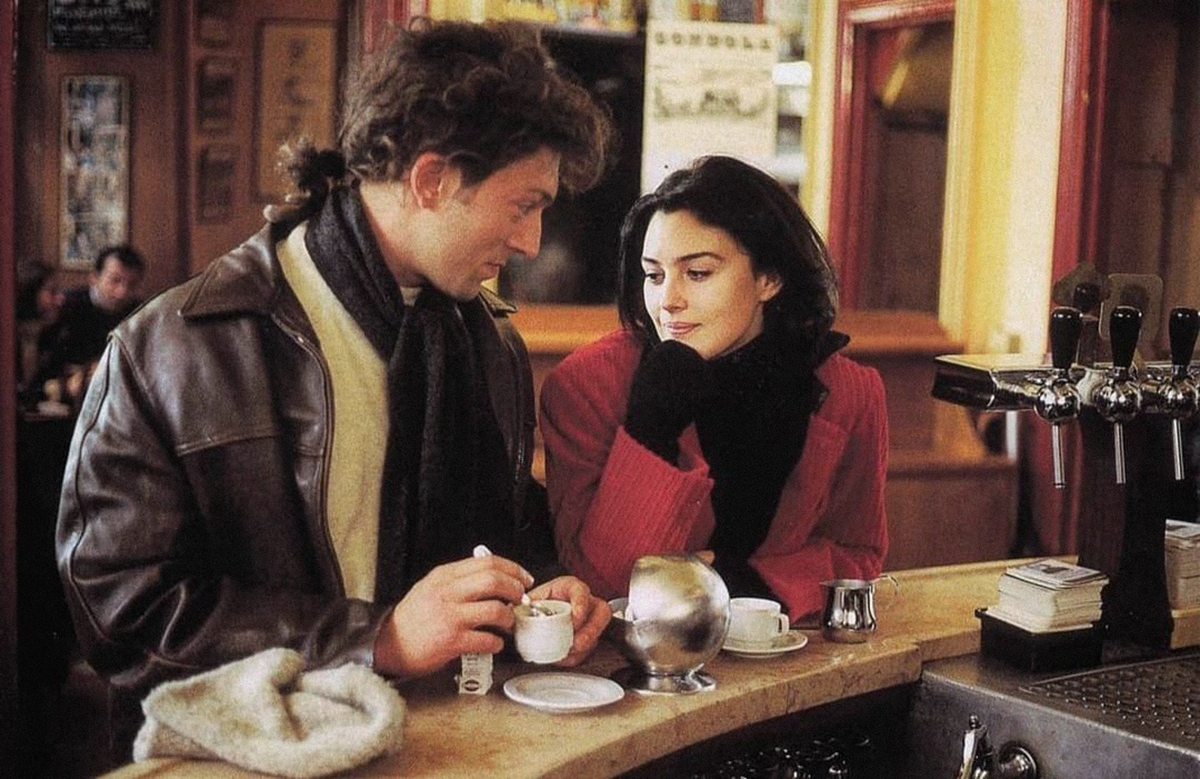
Monica Bellucci and Vincent Cassel in L'Appartement